


kronin323
Font of Useless Knowledge
COOKING PART 3 - thickening
This is the 2nd most important part of a good chili, and the single most important part if you skip the dried chiles and use chili powder instead.
The biggest and most common mistake I see amateurs make is the lack of a thickening agent. Without it, you get watery, runny chili. This should be added when you have about an hour left to your cooking time.
Flour is used as the thickening agent. For chili, use masa, which is a corn flour - it has a more robust taste.
The second most common mistake I see is the application of the thickening agent; some just mix it with water and throw it on. The problem is the temperature of the simmer isn't high enough to properly cook the flour - at best, you get a raw flour taste. At worst, you get runny chili with flour lumps. To do it right, you need to make a roux (pronounced "roo").
A roux is used as a staple for most gravies and sauces; the technique here can be used for many things.
It's pretty simple but at the same time it's easy to screw up without a couple of helpful hints, which I'll point out. First, get ready equal parts of flour and butter, 4 TB each:

Next, melt the butter over medium heat:

Add your flour and whisk in. Don't worry if it's doughy at first; keep whisking over heat and it will liquefy:

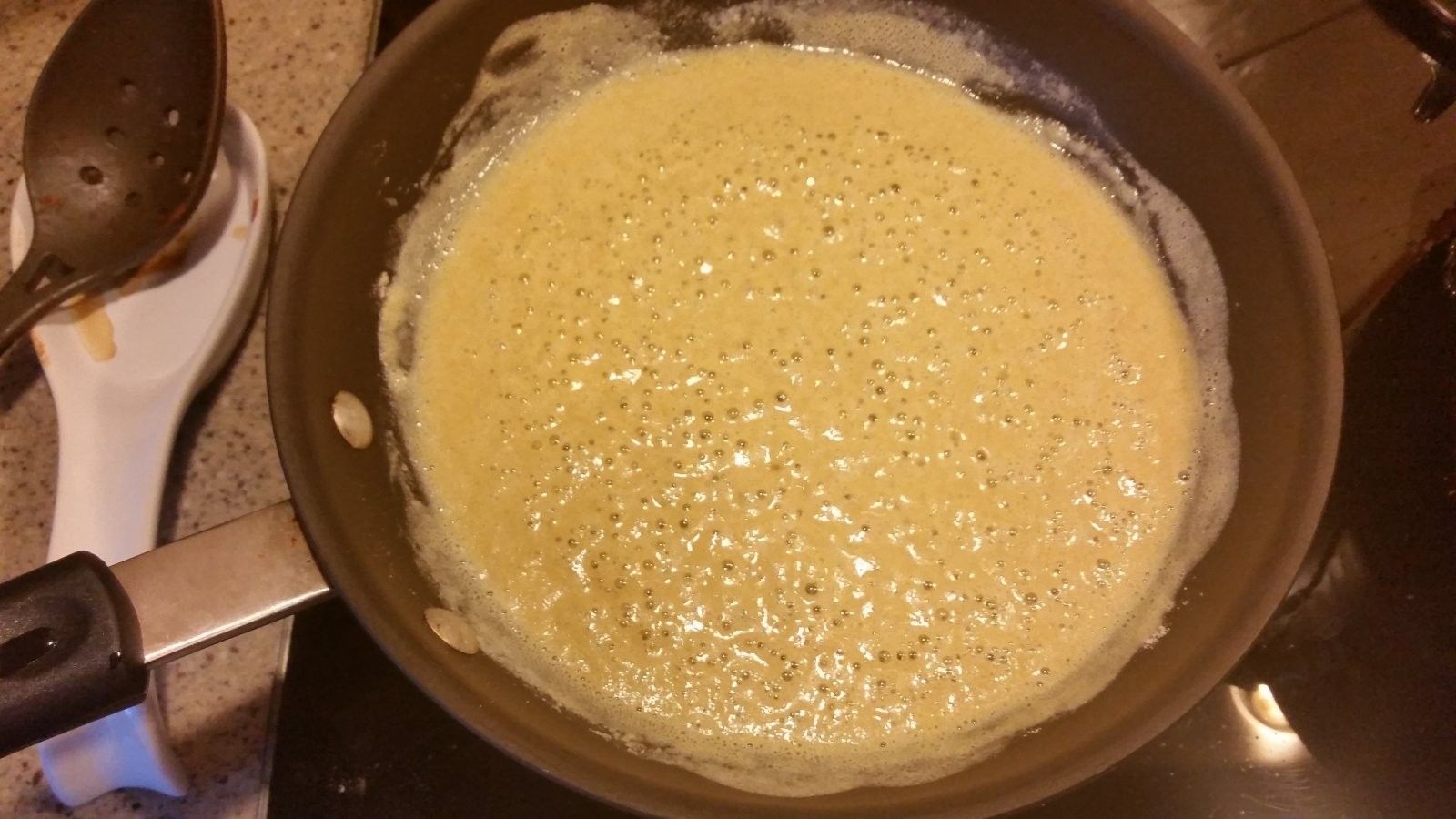
Cook for a few minutes, whisking frequently, until it starts to brown:
The next step is to add some liquid. Here's the two key hints to a successful roux:
1 - remove the roux from the heat before adding liquid.
2 - add HOT liquid, not cold.
I spoon some of the excess liquid from the chili and whisk it in.

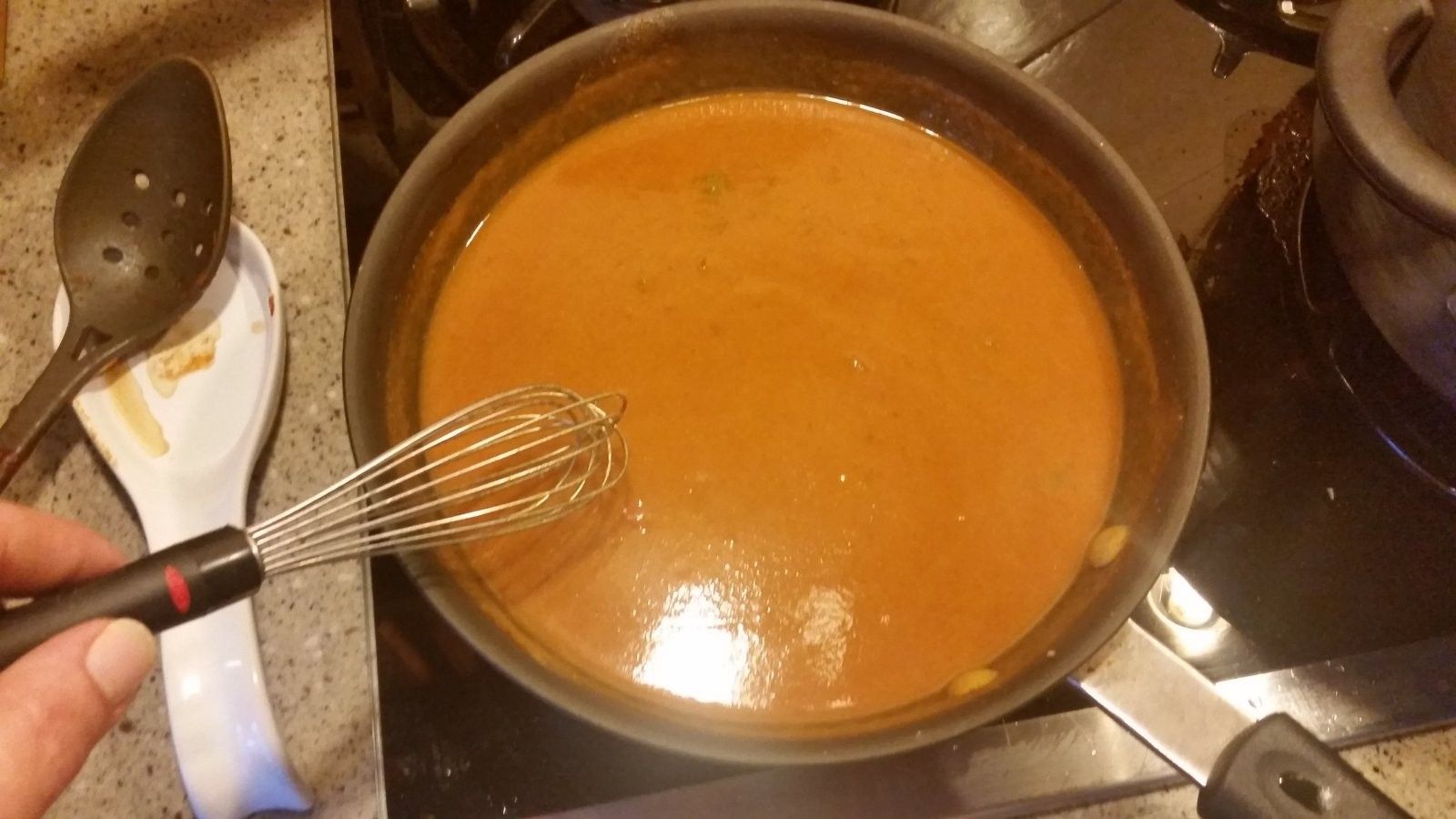
It will start to thicken to a paste immediately but keep whisking and adding liquid until it is more runny:

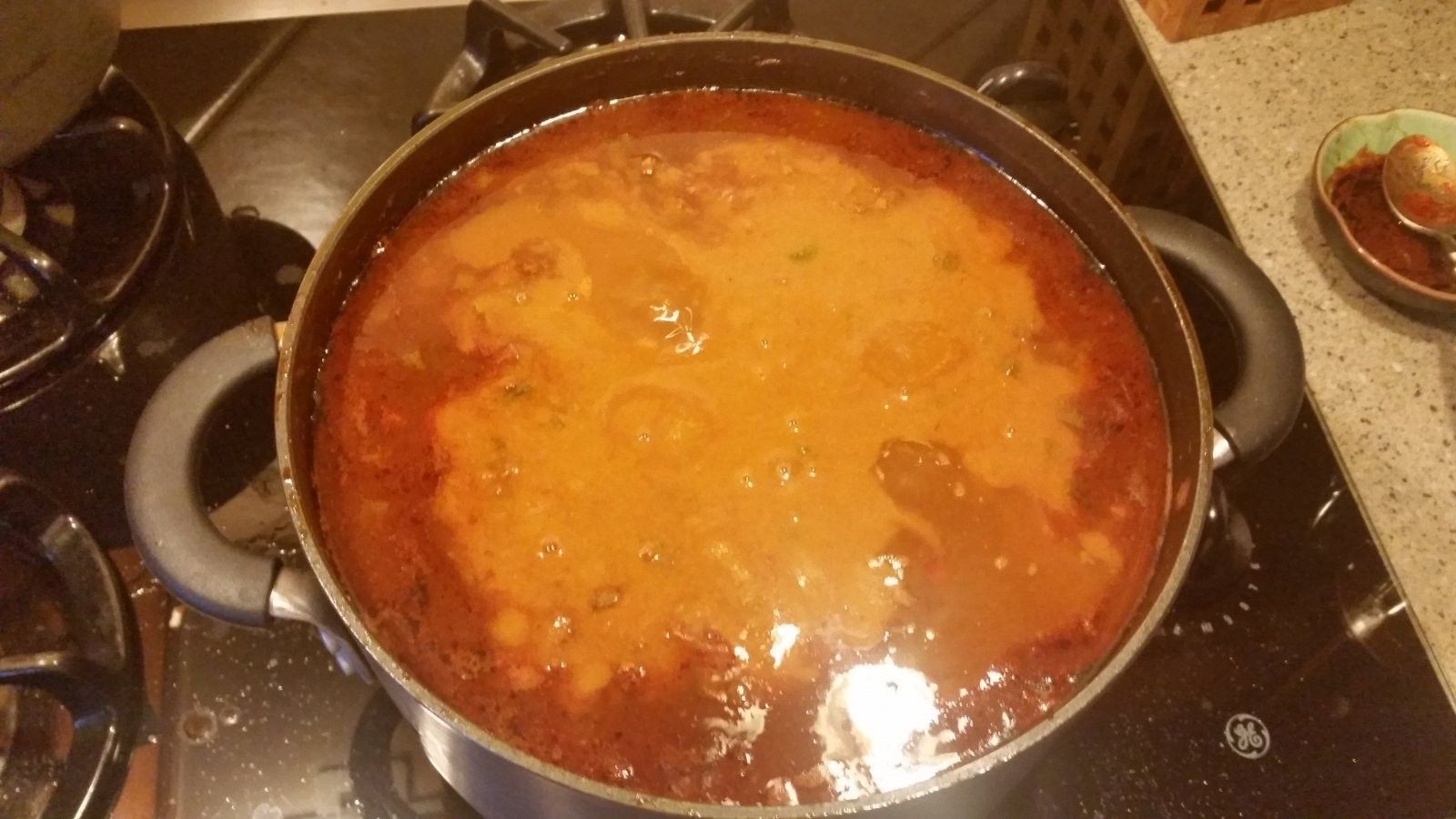
Add it to the chili and stir in well.
This is the 2nd most important part of a good chili, and the single most important part if you skip the dried chiles and use chili powder instead.
The biggest and most common mistake I see amateurs make is the lack of a thickening agent. Without it, you get watery, runny chili. This should be added when you have about an hour left to your cooking time.
Flour is used as the thickening agent. For chili, use masa, which is a corn flour - it has a more robust taste.
The second most common mistake I see is the application of the thickening agent; some just mix it with water and throw it on. The problem is the temperature of the simmer isn't high enough to properly cook the flour - at best, you get a raw flour taste. At worst, you get runny chili with flour lumps. To do it right, you need to make a roux (pronounced "roo").
A roux is used as a staple for most gravies and sauces; the technique here can be used for many things.
It's pretty simple but at the same time it's easy to screw up without a couple of helpful hints, which I'll point out. First, get ready equal parts of flour and butter, 4 TB each:
Next, melt the butter over medium heat:
Add your flour and whisk in. Don't worry if it's doughy at first; keep whisking over heat and it will liquefy:
Cook for a few minutes, whisking frequently, until it starts to brown:
The next step is to add some liquid. Here's the two key hints to a successful roux:
1 - remove the roux from the heat before adding liquid.
2 - add HOT liquid, not cold.
I spoon some of the excess liquid from the chili and whisk it in.
It will start to thicken to a paste immediately but keep whisking and adding liquid until it is more runny:
Add it to the chili and stir in well.
Last edited:


